Wed,Sep,09,2026
Jerry's Cycling Journal: The Restoration of Anfu River Points to a Much Larger Picture
Twenty two years ago, I arrived in China, it would be fair to say that there were many aspects of the country that I disliked but, after just a few months of living here I had made a decision that I wasn't ready to go home, at least not just yet. I wanted more and there was a good reason I wanted more.
I started to travel and I started paying attention to the kinds of things that affect people's lives. One of the most important things I've noticed is that, over the many years I've now lived here, the lives of my friends and the Chinese family that I now have, have all improved and continue to do so. It's not perfect, it probably never will be. The moment China reaches a goal or a milestone towards achieving a goal, it does something that most Western countries don't do — it changes the targets and aims for better, or faster improvements.
However, some of the negative things I'd been told about China were actually true. It was definitely a polluted and dirty country. The river near my home was not a place where kids would happily jump in, there were no pensioners sitting by the riverbank with their fishing rods, there was a pungent smell around it and no one would take a walk along it in the evening. It was obvious to me that the waterways in Chinese cities, and especially Zhongshan, the one I'd chosen to live in, were not something to be proud of.
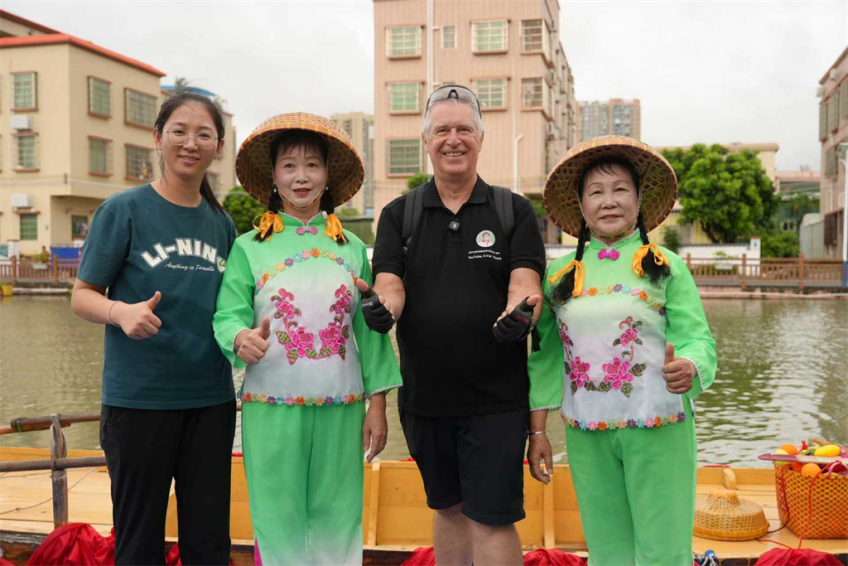
▲Jerry (second from right) with Salty Water Song singers by Anfu River in Tanzhou, Zhongshan. (Photo by Liao Wei)
If we fast forward a few years things started to change and the change was noticeable in many ways. The major river in Zhongshan is the Qijiang River, sometimes known as the Shiqi River and it's now flanked by many kilometres of parkland, there's a bike riding track where I often cycle in the mornings and when I do, I always see people dangling their rods in the water, I see couples and families exercising and I see extensions to the parkland where there are exercise machines, free to the public, there are people singing karaoke and square dancing and, something that's very important for me, there are now coffee shops along the river providing great destinations for short and long bike rides.
The pungent smells have been almost eradicated; raw sewage and industrial waste no longer enter the waterways and many of them are linked by greenways for pedestrians and cyclists to enjoy. All of these create a much better environment for those people who live near these rivers.There are in fact 13 major waterways and over 1,000 inner creeks and tributaries in Zhongshan city. The river area accounts for approximately 8% of its total territory, so it's pretty important that this water quality was improved.
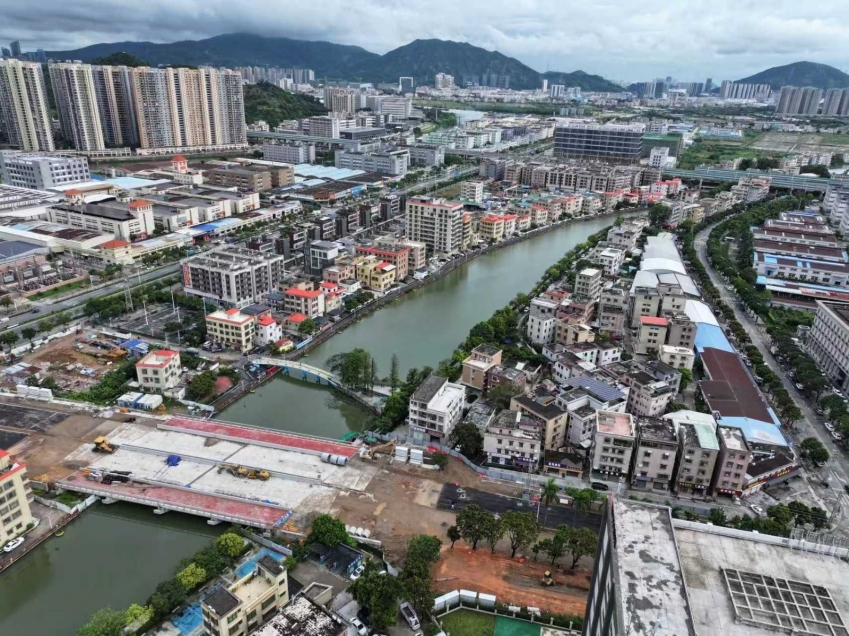
▲Anfu River in Tanzhou, Zhongshan, August 2026. (Photo by Huang Yijie)
Now the Chinese leadership has stated that lucid waters and lush mountains are invaluable assets. The Ecological and Environmental Code was enshrined into law just this month but has been an ongoing government policy and strategy for two decades. What it means is that environmental protection is so important and it's now part of the Constitution of the People's Republic of China.
Nowhere is this more noticeable than alongside rivers where once putrid, stagnant waterways are now clean and usable.
Just yesterday, I left my home near the Qijiang River and cycled across the beautiful green mountains of Wuguishan and into Tanzhou where I came to a stop at the village of Anfu a total distance of about 43 kilometres. I went there because I'd been told the area had been transformed. Just five years ago, people avoided this river, they wouldn't go near it unless they had no choice and many people living alongside of it gave up their homes.

▲Jerry talks with stall owners at the waterfront night market by the Anfu River. (Photo by Liao Wei)
Most of the illegal structures have now gone. The riverside underwent a massive reconstruction project to create footpaths and bike tracks, the silt was dredged, the entire system of flood water and sewage drains was torn up and replaced and the people are living a better life — local specialties are growing in the region, a huge crop of guavas has contributed to the regions economy — and most importantly the village has restarted using the rivers as both a transportation corridor, a leisure space and a place of entertainment, there's a night market and a coffee shop beside a colourful bridge. For the first time, I heard the National Intangible Cultural Heritage Salty Water Songs, passed down through the generations and sung while working in the boats to attract suitors. After a 20 year hiatus, Dragon Boat Racing was back in 2025. This year, the village was able to host a massive Dragon Boat Festival, bringing out 360 thousand visitors in total, something that was inconceivable just a few years ago.
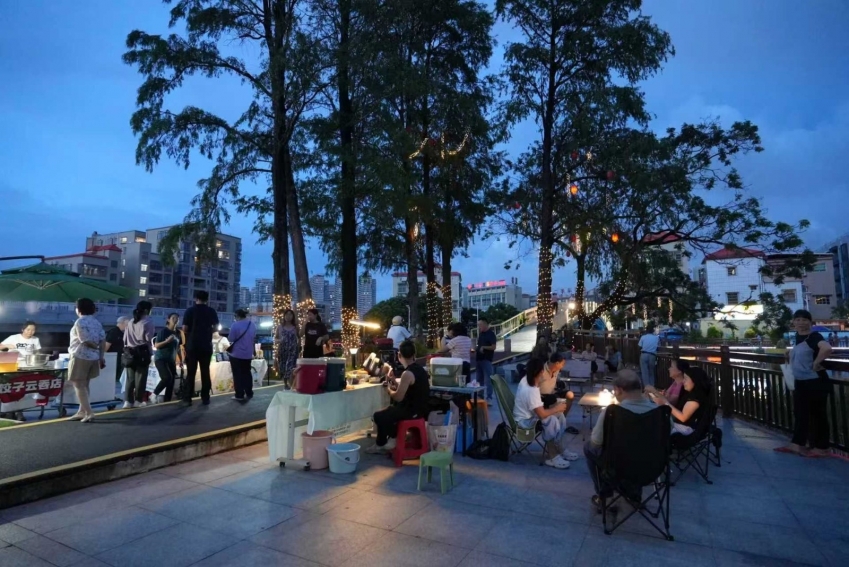
▲The waterfront night market by the Anfu River. (Photo by Huang Yijie)
The local economy is improving because the water is better, tourism is improving because people want to go there rather than avoid it, the lifestyle of locals is improving as their economy picks up and ancient traditions resurge but, it's not just Anfu, it's not even the city of Zhongshan or the wider region of Guangdong but the entire country is experiencing a metamorphosis in environmental conditions and there are even wider implications, China's contribution to the global ecology is massive but it can be measured through tiny steps such as this restoration of Anfu River which points to a much larger picture.
About Zhongshan News Business Culture Services
Copyright © 2018-2019 Zhongshan Daily Newspaper Group. All rights reserved. Presented by zsnews.cn