Sun,Oct,18,2026
As 2025 marks the 100th anniversary of Dr. Sun Yat-sen's passing and 2026 approaches as the 160th anniversary of his birth, the Museum of Dr. Sun Yat-sen, nestled amidst the pines and cypresses in Cuiheng Village, Zhongshan City on the western coast of the Pearl River Estuary, stands both solemn and vibrant at this historic juncture.
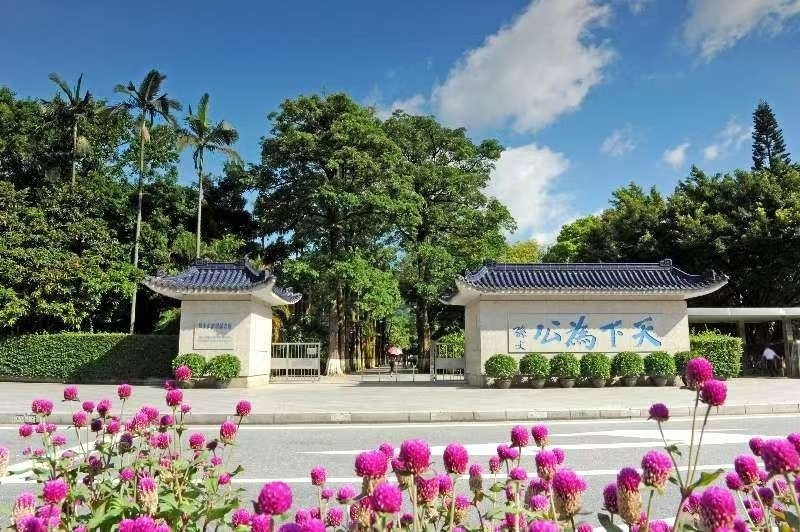
The inscription "The Whole World as One Community" (天下为公) by Sun Yat-sen at the entrance of the museum. Photo provided to Zhongshan Daily
As a material carrier to Dr. Sun Yat-sen's revolutionary spirit, the museum — every brick, tile, blade of grass and tree — silently narrates his journey from a rural lad to a towering figure of the era, witnessing how he intertwined his personal destiny with that of the entire nation. The facility also serves as a "spiritual landmark" that embodies national memory and fosters fellowship among compatriots.
In October 2025, the museum was honored with the title of "Model Organization for Ethnic Unity and Progress in Guangdong Province," a testament to its years of dedicated efforts in promoting ethnic unity. Earlier in May, the newly renovated and upgraded museum opened its doors to the public, leveraging innovative technologies to breathe new life into a century-old revolutionary history through immersive experiences.
From fostering emotional unity among ethnic groups to diversifying its promotional matrix through technological empowerment, the Museum of Dr. Sun Yat-sen is bridging the gap between history and the new generation with a fresh perspective.
Fostering unity, painting a common Chinese dream
Dr. Sun Yat-sen's ethnic thought underwent an evolution, transitioning from the early "anti-Manchu Han nationalism," through the mid-period theories of "five races under one union" and "greater Chinese nationalism," to the later, more mature "national self-determination" concept that developed under the influence of the New Democratic Revolution. His new nationalism, characterized by core tenets such as "the Chinese nation's self-liberation" and "equality among all ethnic groups within China," continues to shine with contemporary relevance, laying a solid ideological foundation for the museum's ethnic unity efforts.
As a significant venue commemorating Dr. Sun Yat-sen, the museum is a vital base for inheriting and promoting his revolutionary spirit and Chinese traditional culture. Guided by Xi Jinping Thought on Socialism with Chinese Characteristics for a New Era, the museum has achieved notable successes in promoting ethnic unity, becoming an "emotional hub" that connects Chinese people at home and abroad. Over the past five years, the museum has welcomed over 14 million visitors from home and abroad (including over 4 million in 2024), hosted over 1,170 educational events, attracted around 140,000 overseas visitors, welcomed over 50 ethnic minority groups from Tibet and Xinjiang, and received over 100,000 compatriots from the Hong Kong, Macao and Taiwan regions and overseas Chinese communities.
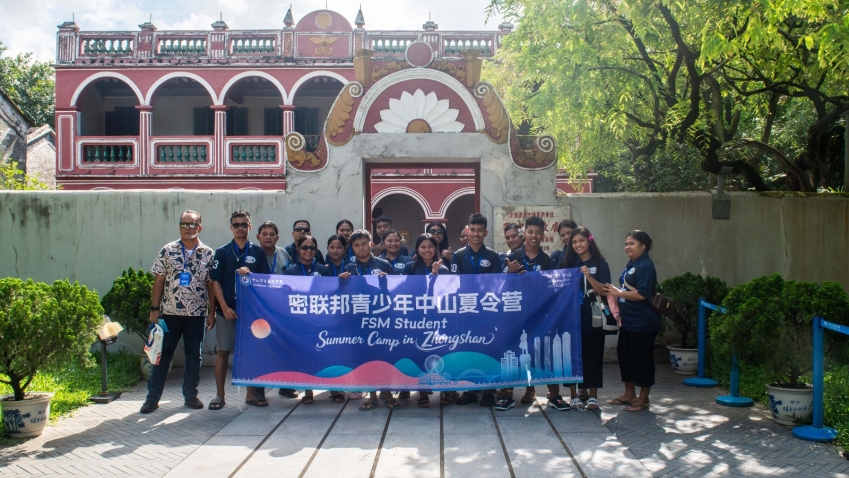
FSM students joining a summer camp in Zhongshan pose for a group photo in front of Sun Yat-sen's former residence. Photo by Zhang Jingtian
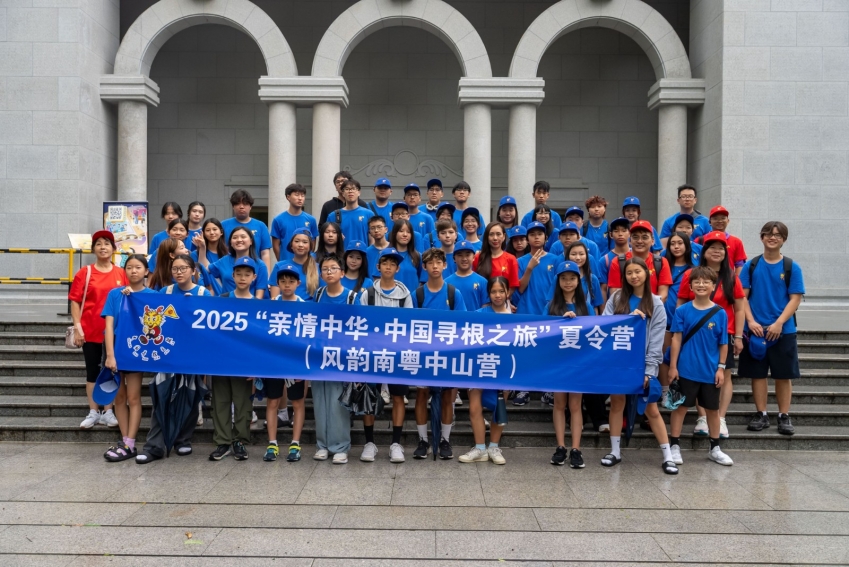
The 2025 "Root-seeking Journey in China" Overseas Chinese Youth Summer Camp takes place at the Museum of Dr. Sun Yat-sen. Photo by Huang Yijie
Behind these figures lies the pursuit of a shared revolutionary historical memory and identification with the national spirit among Chinese people of different ethnic groups and regions.
The advancement of ethnic unity work is deeply rooted in the in-depth exploration and dynamic dissemination of the Sun Yat-sen's thoughts. Through permanent exhibitions, special lectures, academic seminars and other diverse forms, the museum enables the ideal of "revitalizing the Chinese nation" to transcend time and space. In academic research, relying on the museum, academic institutions such as the Sun Yat-sen Research Institute (Zhongshan) have been established, focusing on the long-term research of Sun Yat-sen's cultural resources. Over 40 research monographs have been published, with The Complete Works of Sun Yat-sen winning the First Prize of the 10th Guangdong Provincial Philosophy and Social Science Outstanding Achievement Award. Additionally, over 100 academic events, including the Youth Academic Symposium on Sun Yat-sen and Modern Chinese Studies and the Sun Yat-sen Research Youth Camp, have been held.
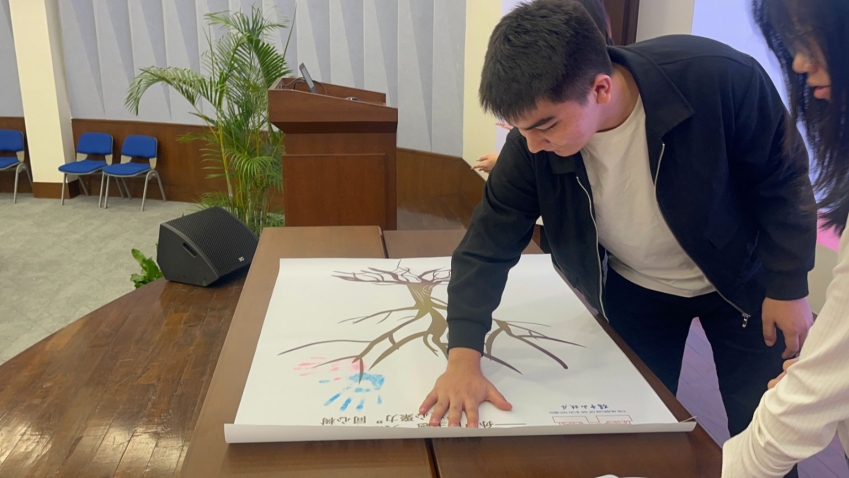
Nurlan from Xinjiang leaves his handprint on the "Unity Tree." Photo provided to Zhongshan Daily
At a thematic educational activity in November 2025, Nurlan, a student from Xinjiang, left his handprint on the "Unity Tree." He remarked, "Today's learning has made me deeply appreciate the hard-earned nature of our current lives. We must cherish our present lives and studies, uphold ethnic unity, and contribute our share to the country's future."
For compatriots from the Hong Kong, Macao and Taiwan regions and overseas Chinese communities, the museum remains an irreplaceable "homeland pilgrimage site." In 2024, nearly a hundred descendants of Sun Yat-sen from the United States, Britain and France, as well as from China's Hong Kong, Macao and Taiwan, gathered in Cuiheng Village to pay homage to their ancestors beneath the tamarind tree planted by Sun Yat-sen over 140 years ago. Sun Yat-sen's great-nephew Victor Sun donated 270 items (sets) of family cultural relics and historical materials to the museum, including five letters personally written by Sun Yat-sen that serve as precious artifacts witnessing family sentiment and national loyalty. From the frequent praises of Sun Yat-sen's descendants Leland Sun and Gregory Sharatchandra Lin during their ancestral visits, to the heartfelt messages left by Sun Yat-sen's great-nephew Peter Sun, each homeland visit becomes a vivid practice of fostering patriotism.
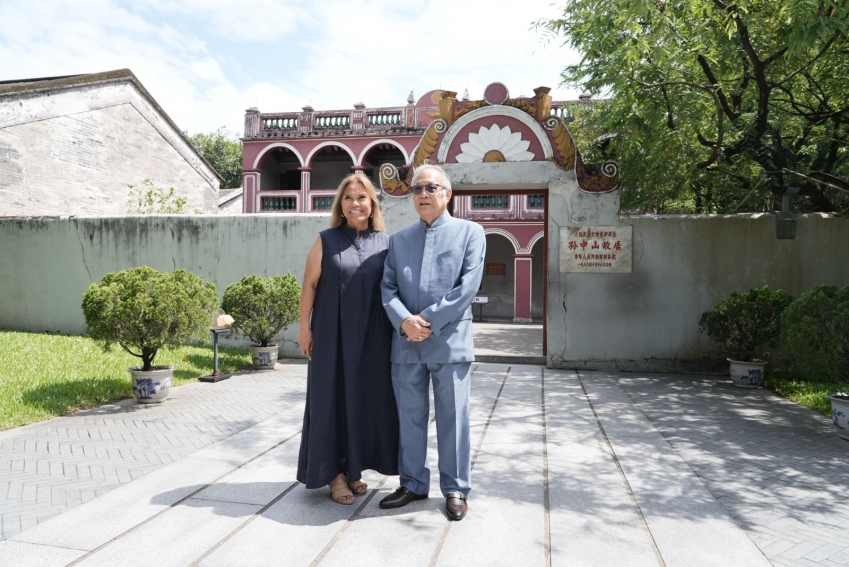
Sun Yat-sen's descendant Leland Sun and his wife pose for a photo in front of Sun Yat-sen's former residence. Photo by Yi Chengle
The establishment of cultural bonds relies on regular exchange and cooperation. To date, the Museum of Dr. Sun Yat-sen has forged long-term cooperative mechanisms with over 20 cultural institutions in China's Hong Kong, Macao and Taiwan as well as in overseas areas, including the Sun Yat-sen Center Foundation and the Dr. Sun Yat-sen Memorial Hall in Taipei. Over 200 joint activities have been organized, attracting over 100,000 participants.
For instance, in March 2025, Zhongshan, Macao and Hong Kong jointly hosted the "From Healing Patients to Saving a Nation: Dr. Sun Yat-sen in Guangdong, Hong Kong and Macao" exhibition. Fourteen cultural relics from Hong Kong and 11 from Macao were displayed alongside the museum's collections, including precious artifacts such as the "Fraternity" scroll personally inscribed by Sun Yat-sen from the Hong Kong Museum of History, and the handscroll inscribed by the "Four Bandits" from the Museum of Dr. Sun Yat-sen.
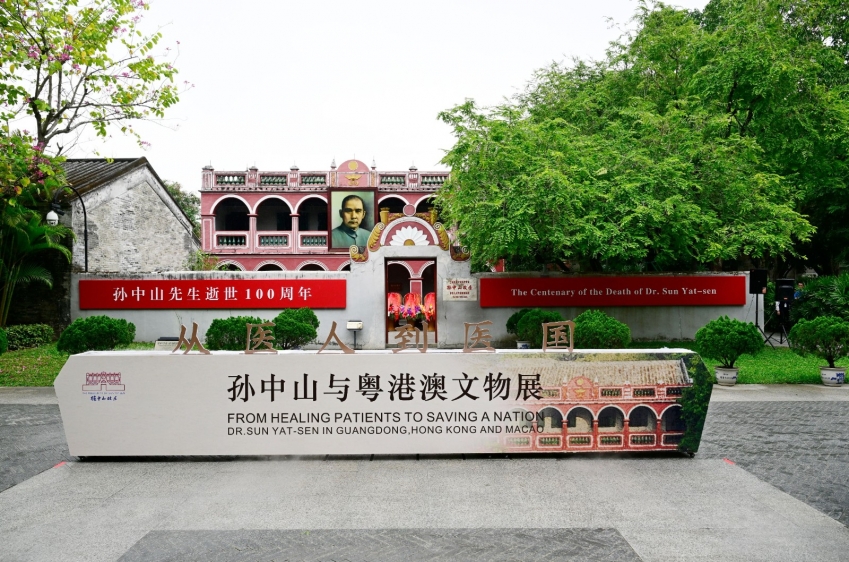
The "From Healing Patients to Saving a Nation: Dr. Sun Yat-sen in Guangdong, Hong Kong and Macao" exhibition. Photo by Yu Zhaoyu
"The 'pluralistic unity' and 'the whole world as one community' advocated by Dr. Sun Yat-sen guide Guangdong in transcending regional and ethnic boundaries in promoting ethnic unity and progress. The practical experience of co-construction and sharing among multiple ethnic groups within the province extends to emotional bonds that unite compatriots from China's Hong Kong, Macao and Taiwan as well as from overseas Chinese communities," noted Zhuang Xin'an, Associate Professor and Assistant to the Dean of the School of Marxism at the University of Electronic Science and Technology of China, Zhongshan Institute. "As the core carrier of this ideology, the Museum of Dr. Sun Yat-sen, through its tangible historical scenes and narratives of cultural relics, transforms abstract concepts into perceivable collective memories of the nation. It plays an irreplaceable role in awakening shared historical roots and strengthening cultural belonging, becoming a vital cultural field and spiritual landmark for Chinese people at home and abroad to trace their origins and enhance ethnic identification."
Technology makes century-old history tangible and accessible
On May 1, 2025, the Museum of Dr. Sun Yat-sen, after over a year of upgrading and renovation, officially reopened to the public. On its first day of trial operation, descendants of Sun Yat-sen were among the first to visit. This upgrade, guided by the principle of "preserving the old while innovating," not only safeguards the historical authenticity and integrity but also reconfigures the presentation of history through modern technology, transforming the museum from a mere "relic display hall" into an "immersive cultural space."
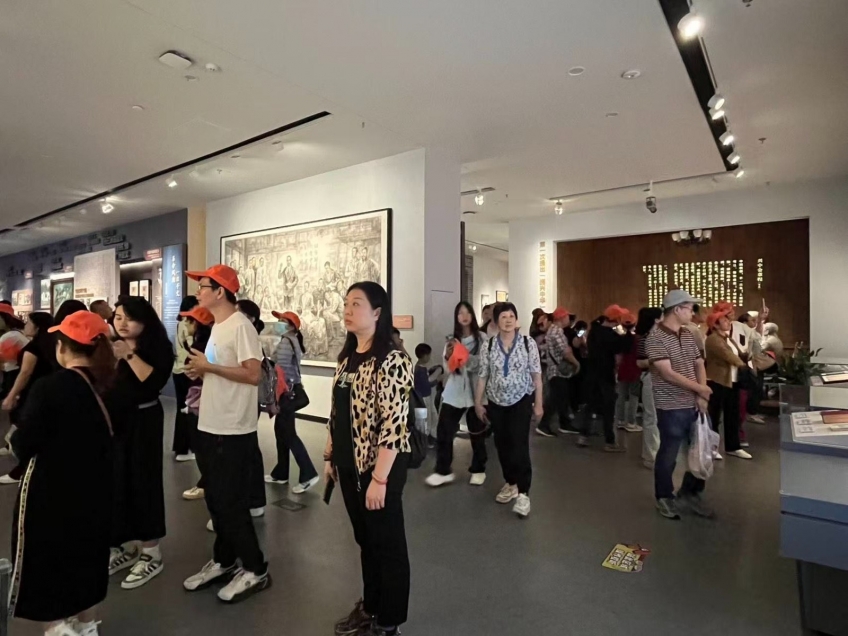
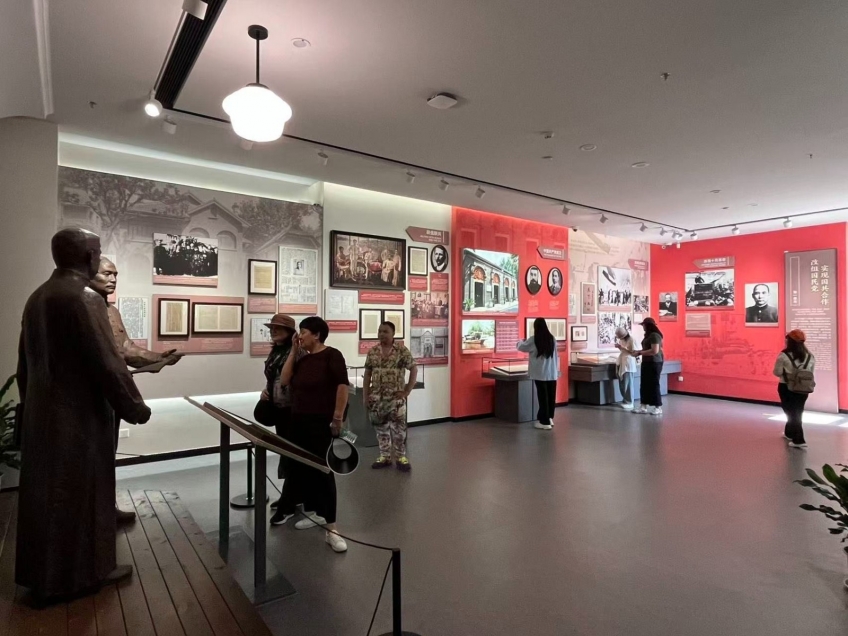
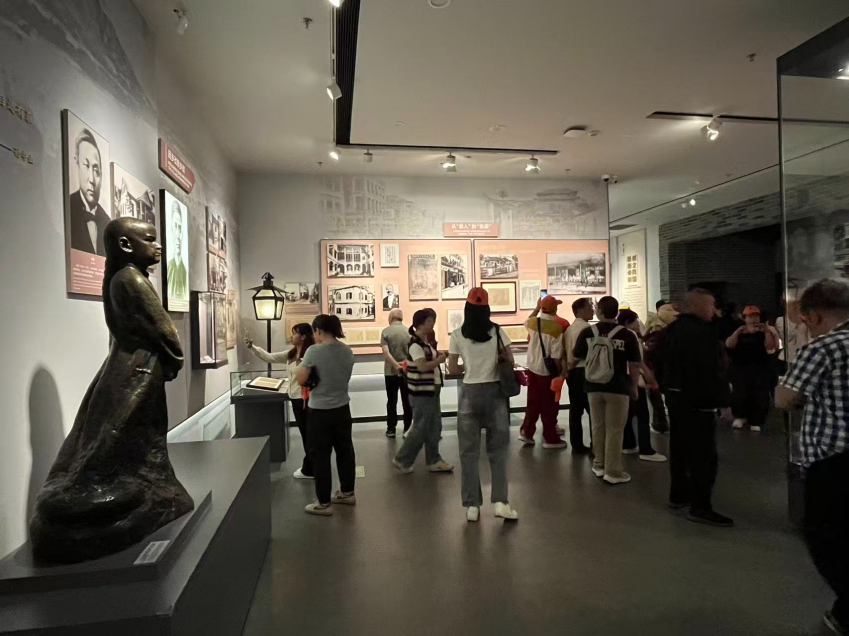
Inside the newly renovated Museum of Dr. Sun Yat-sen, the quality of exhibitions has been elevated. Photo provided to Zhongshan Daily
The significant innovation of the new museum lies first in the reconfiguration of its narrative system and the enhancement of exhibition quality. The museum actively upgraded its basic exhibition, "Dr. Sun Yat-sen, The Great Pioneer of China's Democratic Revolution." This exhibition, with "The Great Footsteps" as its explicit theme, sets up five major exhibition zones, including "Seeking to Find a Way Out" and "Defending the Republic." Through over 410 precious historical photographs and over 120 cultural relics and artifacts, the exhibition comprehensively presents Sun Yat-sen's life trajectory from a village boy in Cuiheng to a revolutionary pioneer. Simultaneously, with "The Evolution of Ideological Thought" as its implicit theme, the exhibition incorporates precious materials such as Sun Yat-sen's speeches and historic declarations, intuitively showcasing the evolution of his revolutionary ideas. This exhibition has been selected as a key recommended project for the 2025 "Reading China in Museums" thematic exhibitions jointly announced by the National Cultural Heritage Administration (NCHA) and Office of the Central Cyberspace Affairs Commission of China.
New displays include a three-minute immersive video "Revolutionary Tide." It uses dynamic images and sound-light effects to recreate the surging tide of revolution from the founding of the Revive China Society in 1894 to the Wuchang Uprising in 1911. The creation team, using Chapter 8 of "Memoirs of a Chinese Revolutionary" as a blueprint, spent 8 months refining the script through multiple revisions. Through Sun Yat-sen's self-narrative perspective, the video portrays the journey of his revolutionary ideas from germination to a nationwide movement, embodying his unwavering revolutionary spirit of "pursuing my aspirations without hesitation."
Technology empowerment has also become a prominent highlight of the exhibition upgrades. Mixed reality (MR) glasses, integrating technologies such as spatial algorithm recognition, high-precision positioning, real-time rendering and voice interaction, seamlessly overlay virtual information onto the real world. "Visitors can simply wear the glasses to experience dynamic scene changes as they move, engaging in immersive interactions with historical figures and three-dimensional images in a virtual-real fusion space. They can personally retrace Sun Yat-sen's revolutionary path and relive those turbulent years," explained Ren Yuteng, a technician in the museum. The MR guided tour system covers 23 interactive points throughout the museum, allowing visitors to witness the surging tide of revolution and to listen to Sun Yat-sen's 1924 speech.
"Here, I learned many stories about Sun Yat-sen's life. The AI-powered 'Cuiheng Villager', especially, allowed us to grasp the life stories of historical figures more fully through modern and intelligent means. I can feel the power of combining technology and history. It is very interesting," a visitor said.
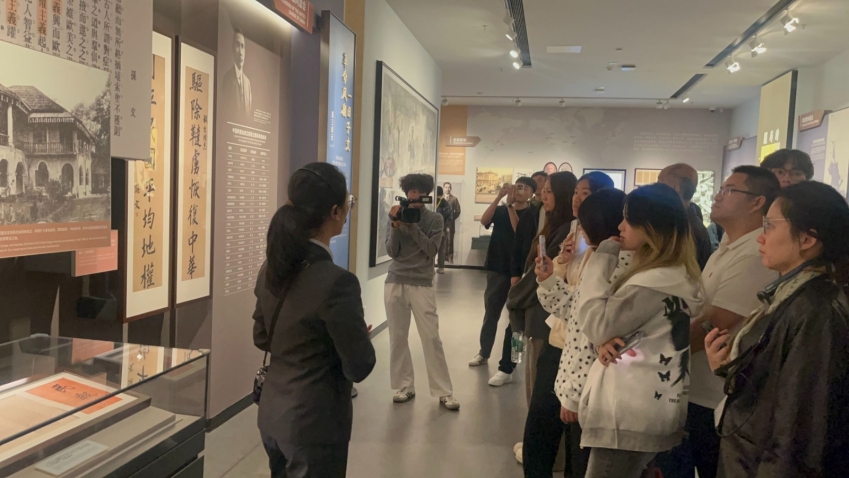
Students learn about Sun Yat-sen's national spirit at the Museum of Dr. Sun Yat-sen. Photo provided to Zhongshan Daily
In terms of content and service upgrades, the museum has launched a series of activities and special educational programs, transforming exhibition halls into lively classrooms. For visitors of different age groups, customized services such as "Curator's Special Guided Tour" and "Differentiated Guided Tour" will be introduced in the future to ensure that both professional and general visitors can derive value.
Meanwhile, thematic educational activities launched in conjunction with the new museum resources adopt an "exhibition + practice" model, providing diversified avenues for inheriting the great man's spirit. The "In Pursuit of Sun Yat-sen" series of ideological and political courses was selected by the NCHA and the Ministry of Education as one of the high-quality resource construction and recommendation projects for "Great Ideological and Political Courses" themed around revolutionary cultural relics in 2024. The Yang Yin-themed "Great Ideological and Political Course" was recognized by the Department of Culture and Tourism of Guangdong Province as a model project for museum-school cooperation, with over 500 courses and activities organized in the past five years. The museum actively collaborates with over 20 universities and primary and secondary schools, including Sun Yat-sen University and Jinan University, to establish "Great Ideological and Political Course" practical teaching bases. They jointly develop "Great Ideological and Political Course" textbooks and local materials, and conduct teacher training programs, continuously exploring new paths for the integrated development of education.
Lu Shenqin, Director of the Department of Ideology and Morality and Rule of Law of the School of Marxism at Zhongshan Polytechnic and a Doctor of Law, stated, "Practical teaching is a crucial approach to constructing high-quality 'Great Ideological and Political Courses.' The exhibitions and historical heritage of the museum provide rich materials for practical teaching. Organizing students to visit the museum for research, inviting museum staff to deliver lectures on campus and integrating the stories of cultural relics into course design help move beyond the abstractness of theoretical teaching, make the content more concrete, and enhance students' participation and comprehension. Such cooperative teaching innovates the form of ethnic unity education and improves the effectiveness of ideological and political education."
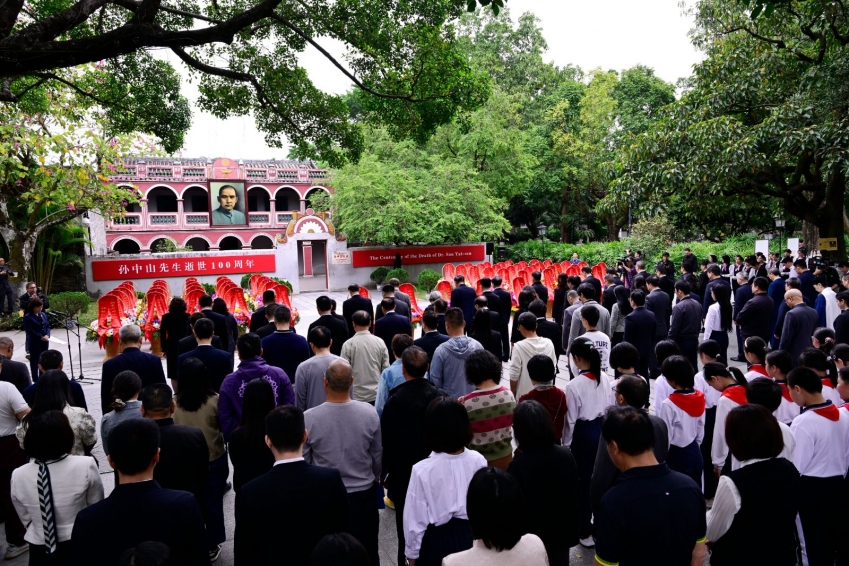
Observe a moment of silence before the portrait of Dr. Sun Yat-sen to commemorate the 100th anniversary of his passing. Photo by Yu Zhaoyu
The upgrades brought a surge in popularity to the museum. During the National Day holiday in 2025, the Museum of Dr. Sun Yat-sen welcomed over 150,000 visitors, with a single-day record of 33,000 visitors on October 3. To ensure a quality visiting experience, the museum provided 106 guided tours, serving over 10,000 visitors.
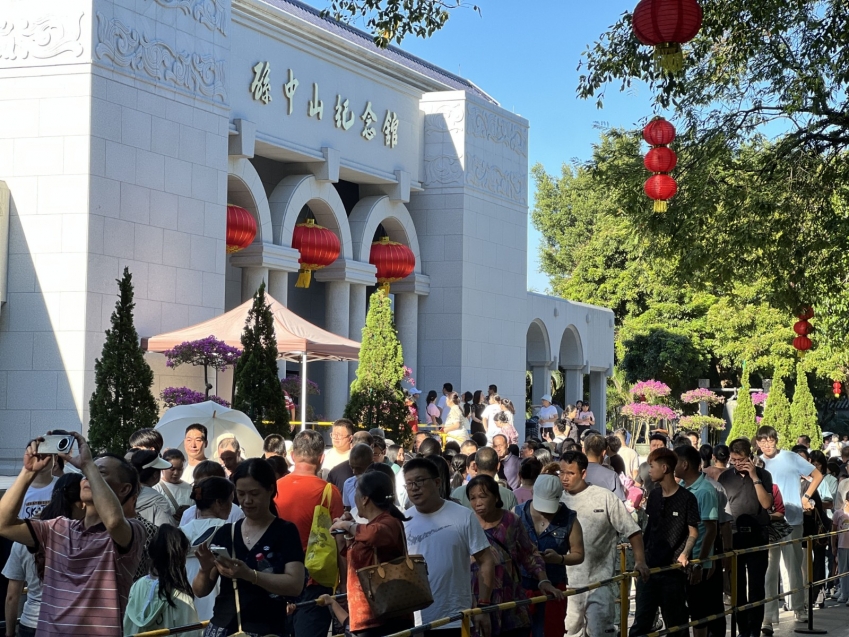
During the National Day holiday this year, the Museum of Dr. Sun Yat-sen welcomes over 150,000 visitors. Photo provided to Zhongshan Daily
From Sun Yat-sen's call to "revitalize the Chinese nation" to the common dream painted by compatriots of all ethnic groups; from the Strong Nation Dream of the youth in Cuiheng Village beneath the tamarind tree to the cross-temporal dialogues in the digital exhibition hall, every step of cultural construction and development at the Museum of Dr. Sun Yat-sen is an inheritance and practice of the great man's spirit. Currently, the museum is adhering to the development philosophy of being "strong, vibrant and excellent," continuously enhancing the golden brand of the hometown of a great man. At the historic intersection of the 100th anniversary of Sun Yat-sen's passing and the 160th anniversary of his birth, this cultural landmark, blending historical depth with contemporary vitality, is embracing a more open posture and innovative approaches to constantly infuse cultural impetus into forging a strong sense of community for the Chinese nation and jointly sketching the blueprint for national rejuvenation.
About Zhongshan News Business Culture Services
Copyright © 2018-2019 Zhongshan Daily Newspaper Group. All rights reserved. Presented by zsnews.cn